

Overview
In Rwanda and Kenya, we co-lead the NIHR-funded SHARP (Shaping Health Packages and Researching Priorities) consortium. The programme, running from 2025-2028, supports the design, evaluation and institutionalisation of Health Benefit Packages using Evidence-Informed Priority Setting.
The consortium combines formative and evaluative research to strengthen how benefit packages are designed, implemented and revised. Areas of research include evidence assessment, implementation constraints, and strengthening patient and community involvement in HBP processes.
Context & Objectives
Our focus in Rwanda is on Work Package 1.2, which addresses a critical gap in many low- and middle-income countries: how to meaningfully involve patients, communities and the public in priority setting for health benefit packages.
Although stakeholder engagement is widely recommended, few countries have structured procedures for patient and community involvement in reimbursement or benefit design decisions. The SHARP programme therefore seeks to:
- Map and categorise relevant stakeholders in Rwanda and Kenya
- Analyse their interests, influence and preferences regarding HBP engagement
- Review international and regional approaches to patient and community involvement
- Co-design context-appropriate engagement strategies
- Pilot and evaluate structured involvement within ongoing HBP processes
The work distinguishes between consultation (soliciting perspectives) and participation (direct involvement in decision-making bodies), recognising that optimal strategies depend on institutional context and stakeholder readiness.
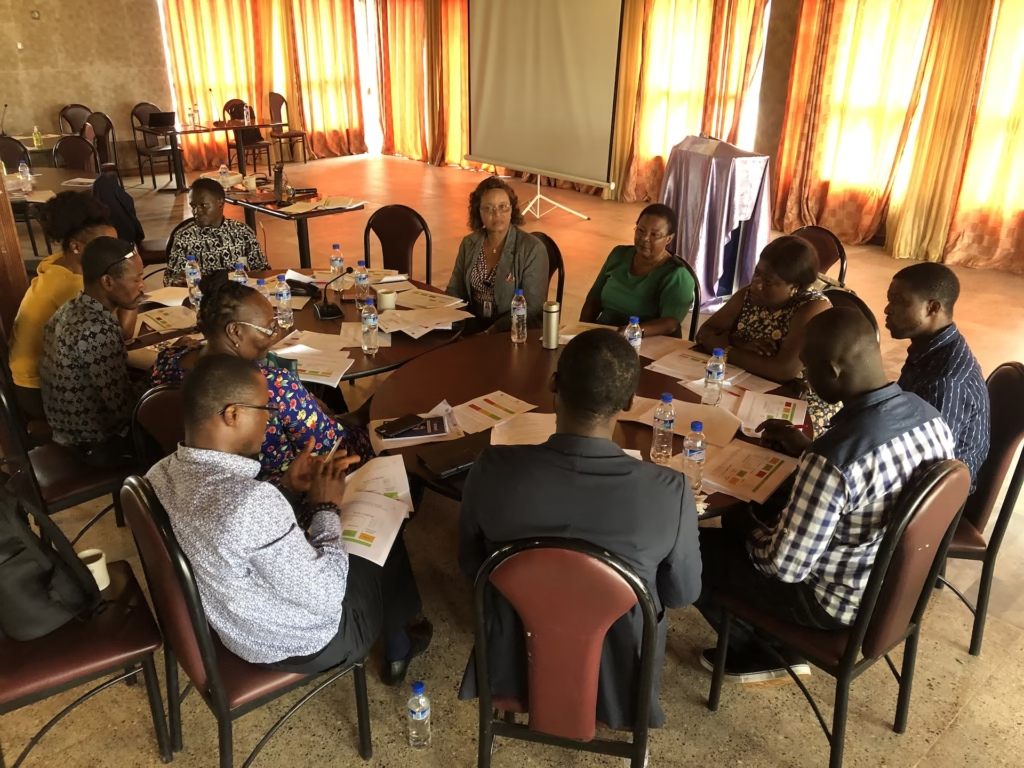
Through stakeholder mapping, systematic review, focus group discussions and co-design workshops, the programme develops practical and implementable strategies for community engagement in HBP decision-making.
The objective is not symbolic participation, but to strengthen legitimacy, transparency and accountability of national priority setting systems.
Key Contribution
SHARP positions community and patient involvement not as an add-on, but as a core component of institutionalised Evidence-Informed Priority Setting. The work generates practical guidance for African settings and contributes to regional capacity building in collaboration with Africa CDC.
Collaborating Partners
- London School of Hygiene and Tropical Medicine
- KEMRI
- University of Rwanda School of Public HealthUniversity of Nairobi.