

Overview
Liberia developed a Universal Health Coverage Essential Package of Health Services (UHC EPHS) as a central reform to define healthcare entitlements and strengthen progress toward UHC. The reform was undertaken within the framework of the Disease Control Priorities 3 (DCP3) Country Translation Programme, led by Ala Alwan, which supported countries in translating global priority-setting evidence into national benefit packages.
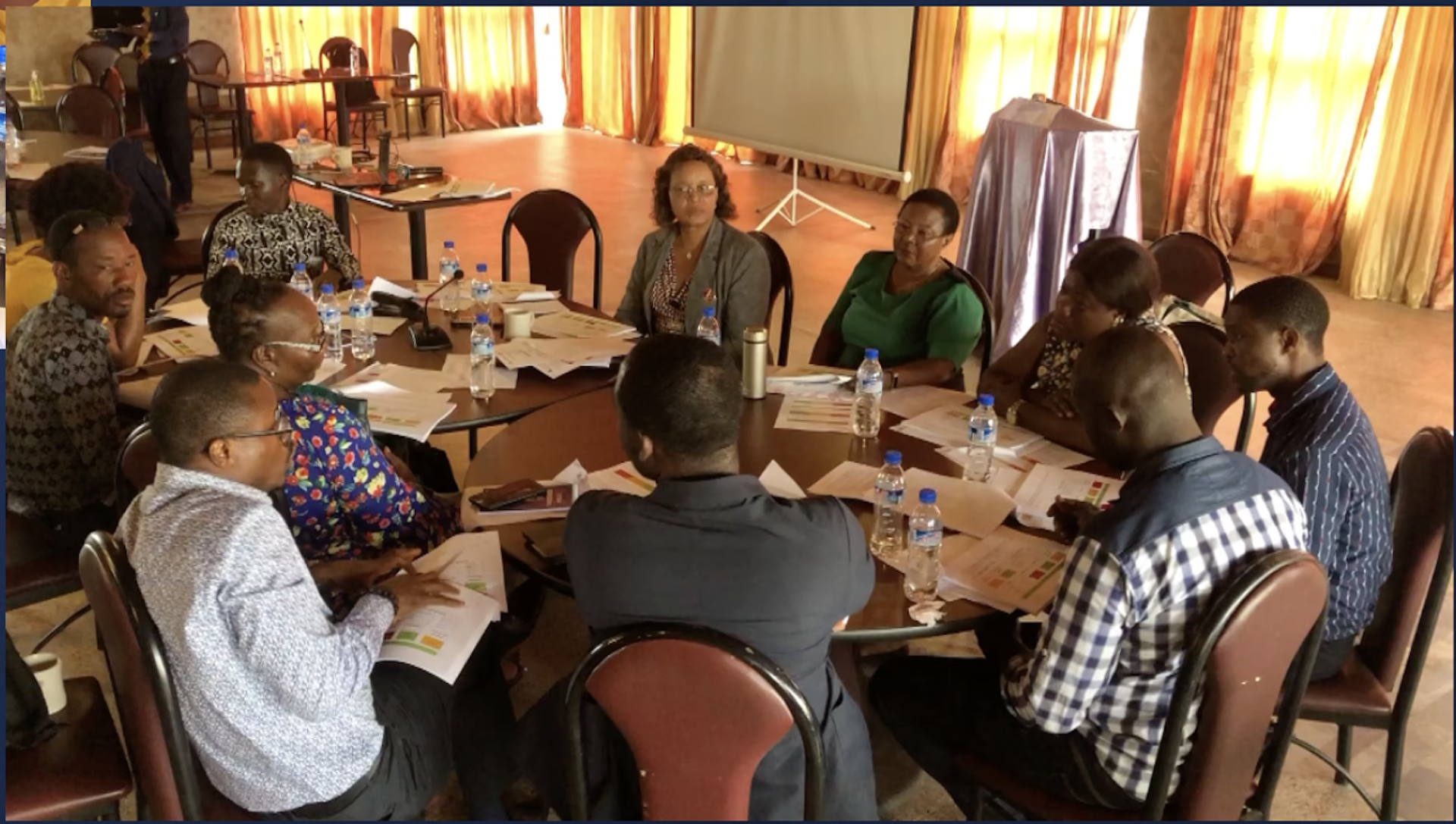
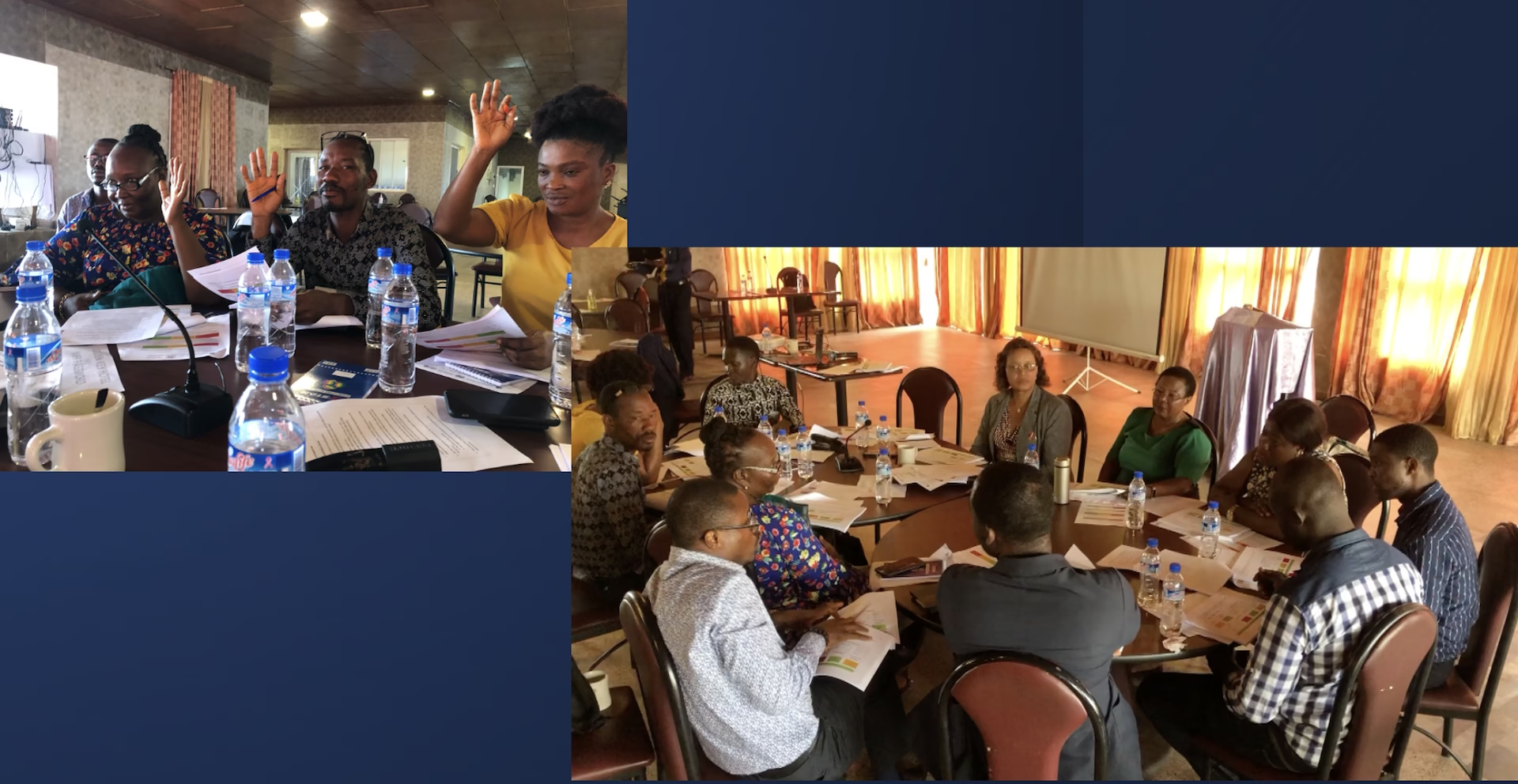
The process was led by the Ministry of Health and implemented using an Evidence-Informed Deliberative Process (EDP) developed and operationalised by our team to support the design of an affordable and implementable package under severe fiscal constraints.
The final package focuses primarily on high-impact primary healthcare interventions. It comprises 128 interventions organised into a publicly financed core subpackage and a complementary subpackage funded through cost-sharing and partner support. The adopted package balances disease burden, cost-effectiveness, financial risk protection and feasibility within a constrained fiscal envelope of approximately US$12–14 per capita.
Context & Objectives
Liberia is a low-income country facing significant health system gaps and fiscal limitations. In 2019, nearly 2 million disability-adjusted life years (DALYs) were lost, largely due to communicable, maternal, child and nutritional conditions. Public financing remains limited, with high dependence on donor funding and substantial out-of-pocket expenditure.
Mapping of existing services revealed that only around one quarter of essential interventions were available at adequate coverage levels. At the same time, projected declines in donor funding created additional urgency for structured prioritisation.
In 2022, the Ministry of Health initiated development of a UHC EPHS in collaboration with the Disease Control Priorities 3 (DCP3) Country Translation Project. The objectives were to:
- Define a transparent and affordable essential package
- Align services with national disease burden and social values
- Ensure fiscal feasibility within projected government resources
- Strengthen institutional capacity for structured priority setting
- Facilitate transition from package design to implementation
Strong political leadership and alignment with national planning processes were central to the process.
Approach & Methods Used
- Ministry-led governance structure with technical working groups and a dedicated secretariat
- Mapping of existing services against the DCP3 model package
- Shortlisting of 240 candidate interventions for prioritisation
- Application of Evidence-Informed Deliberative Processes (EDPs)
- Use of eight explicit decision criteria: disease burden, effectiveness, cost-effectiveness, quality of evidence, financial risk protection, budget impact, feasibility and equity considerations
- Use of the Health Intervention Prioritisation Tool (HIPTool) to contextualise global evidence
- Fiscal space analysis to define an affordable public financing envelope
- Scenario development to align priorities with available government resources
Outcomes
The final EPHS includes:
- 78 interventions in a core publicly financed subpackage (US$6.93 per capita government cost; 874,000 DALYs averted)
- 50 complementary interventions funded through cost-sharing (US$5.35 per capita government cost)
- Total government cost of US$12.28 per capita, averting approximately 1.17 million DALYs
Key lessons:
- Evidence-informed prioritisation is feasible in low-income settings
- Under severe fiscal constraints, focusing on high-impact primary healthcare is the most realistic strategy
- Fiscal sustainability remains a major challenge due to declining donor funding
- Implementation requires continued strengthening of health system building blocks and stronger engagement of the finance sector
- Institutionalisation of priority setting and ongoing capacity development are essential for future package revisions
Collaborating partners
- Republic of Liberia Ministry of Health
- London School of Hygiene & Tropical Medicine
- University College London
- International Centre for Migration Switzerland