

Overview
Tanzania was among the first low-income countries in sub-Saharan Africa to attempt to institutionalise a Health Technology Assessment (HTA) process. The country used the revision of its National Essential Medicines List (NEMLIT) as an entry point for evidence-informed decision making.
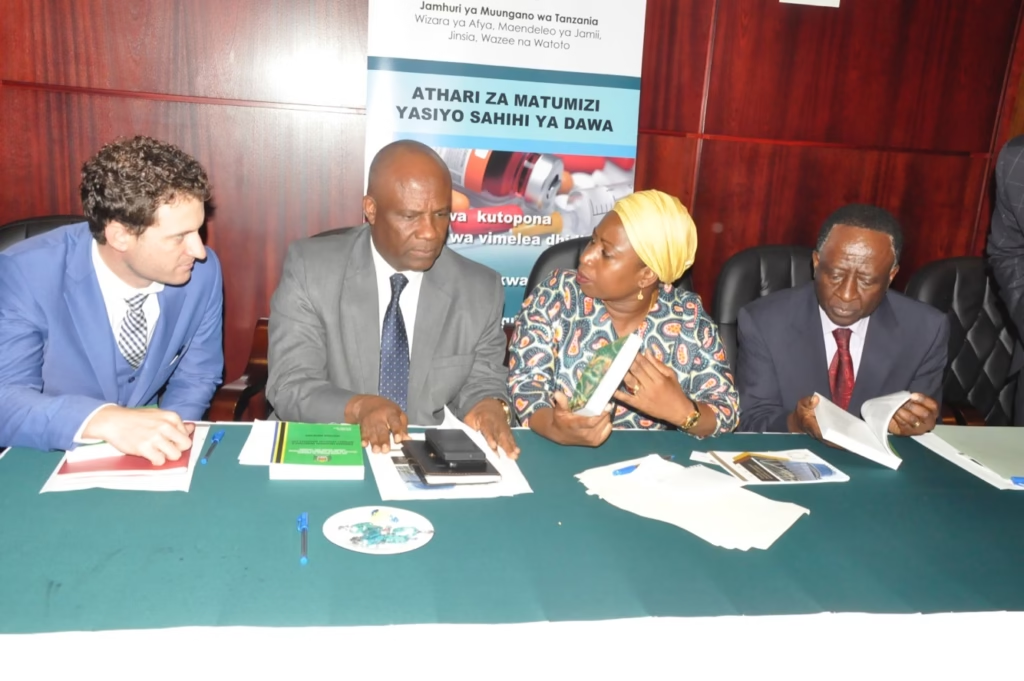
Through collaboration between the Ministry of Health, Community Development, Gender, Elderly and Children (MoHCDGEC), PATH, PRICELESS SA, and the International Decision Support Initiative (iDSI), structured HTA processes were introduced into medicine selection, and a national HTA committee was subsequently established. The Tanzania experience represents a transition from a system with no formalised priority-setting mechanism toward an emerging, institutionalised, evidence-informed appraisal process embedded within the Ministry’s governance structures.
Context & Objectives
Prior to 2014, there was no formalised priority-setting mechanism in the Tanzanian health system: decisions were made in a bureaucratic fashion by program-specific committees, with little or no health economic evidence underpinning them. The NEMLIT itself had no adherence requirement in practice, and selection criteria historically covered efficacy, safety, availability, and WHO compliance – with no consideration of cost-effectiveness.
As Tanzania pursued its commitment to Universal Health Coverage, the government aimed to:
- Introduce HTA concepts and evidence-informed decision making into an existing, necessary process (the NEMLIT revision)
- Build technical capacity in economic evaluation and evidence appraisal among clinicians, pharmacists and Ministry officials
- Establish a formal HTA committee with a clear mandate and terms of reference
- Incorporate cost-effectiveness explicitly into selection criteria for medicines
Approach & Methods Used
- Sensitisation and situational analysis of existing decision-making structures with PATH (2014–2015)
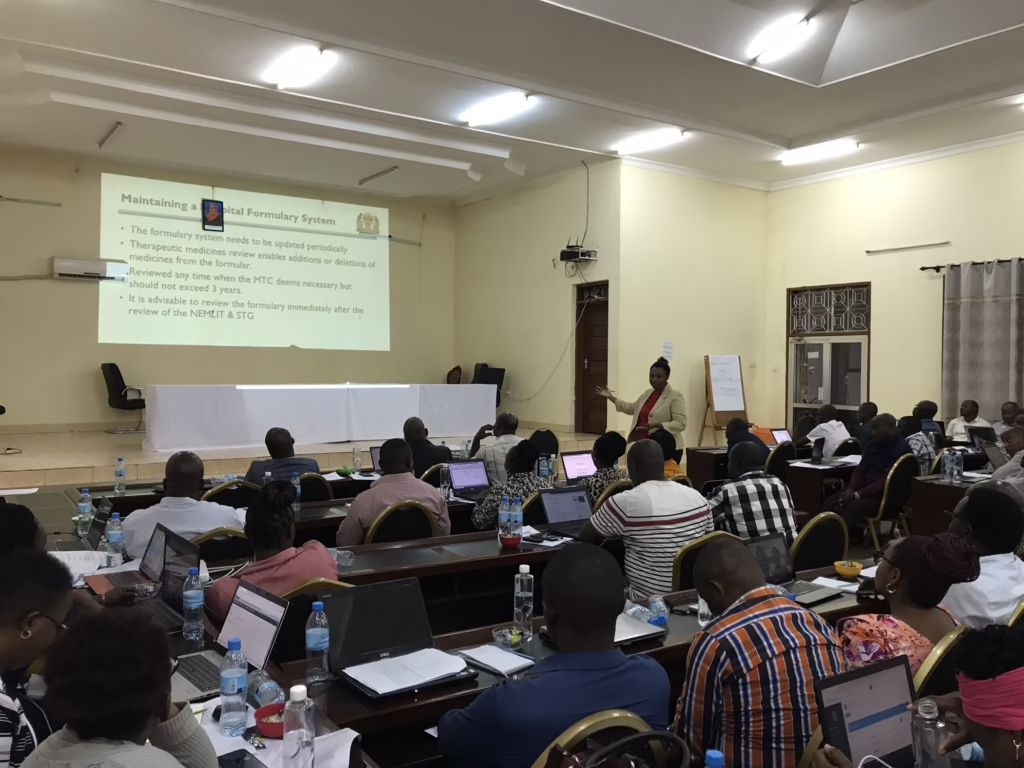
- Introductory and technical workshops with HITAP (Thailand) and PRICELESS SA, identifying capacity gaps in PICO, literature appraisal and costing
- Use of the 2017 NEMLIT revision as a practical demonstration project for HTA
- Development of a Standard Operating Procedure embedding cost-effectiveness alongside efficacy and safety as formal selection criteria
- Establishment of the Tanzanian Health Technology Assessment Committee (THTAC), with terms of reference and multidisciplinary membership
- Baseline capacity survey of committee members to guide future capacity strengthening
Outcomes
By the end of 2017, the revised STG/NEMLIT had incorporated cost-effectiveness criteria for the first time, resulting in approximately 140 medicines removed and 170 new products added based on efficacy, safety, cost-effectiveness and regulatory registration. This was the first time cost-effectiveness had featured in Tanzania’s essential medicines selection process, and it produced the country’s first formal HTA committee.
The 2018 capacity survey found that while THTAC members were well-qualified and experienced in clinical medicine, they had limited experience with economic evaluation, RCTs, or equity analysis, and expressed low confidence in core HTA methods such as ICER interpretation and willingness-to-pay thresholds – providing a concrete baseline for future capacity strengthening.
Key lessons include:
- A demonstration project that is a genuine institutional necessity (not just an academic exercise) is far more effective at generating demand for HTA than abstract advocacy
- Strong, continuous engagement from multiple international partners combined with one consistent in-country focal point, was critical to sustaining political will despite staff turnover
- Capacity building must precede the introduction of technical criteria like cost-effectiveness
- Formal SOPs and guidance documents give legitimacy and continuity to the process beyond any single revision cycle
- Institutionalisation is an ongoing process: committee capacity, dedicated financing, and links to reimbursement (NHIF) remain key unfinished challenges
Related Publications & Reports
- Surgey G, Chalkidou K, Reuben W, Suleman F, Miot J, Hofman K. Introducing health technology assessment in Tanzania. Int J Technol Assess Health Care. 2020;36(2):80-86. doi:10.1017/S0266462319000588.
- Surgey G, Mori AT, Baltussen R. Health technology assessment in Tanzania: capacity and experience of HTA committee members. J Glob Health Econ Policy. 2022;2:e2022004. doi:10.52872/001c.33116.