

Overview
As part of Kazakhstan’s wider health financing reform related to the rollout of Mandatory Social Health Insurance (MSHI), the country sought to clarify entitlements, improve financial sustainability, and introduce more structured priority setting mechanisms.
Our support included capacity building and analytical assistance to enhance the use of HTA in designing benefit packages. By applying evidence-based deliberative processes (EDPs), we aimed to improve the legitimacy and transparency of priority-setting decisions.

Context & Objectives
Kazakhstan’s health system has undergone significant reform over the past decade, moving toward expanded insurance coverage and stronger state stewardship. The government therefore sought to:
- Improve transparency in priority setting processes
- Align benefit design with available public financing
- Strengthen analytical capacity for structured priority setting
Approach & Methods Used
- Development of HTA reports for 25 selected health technologies
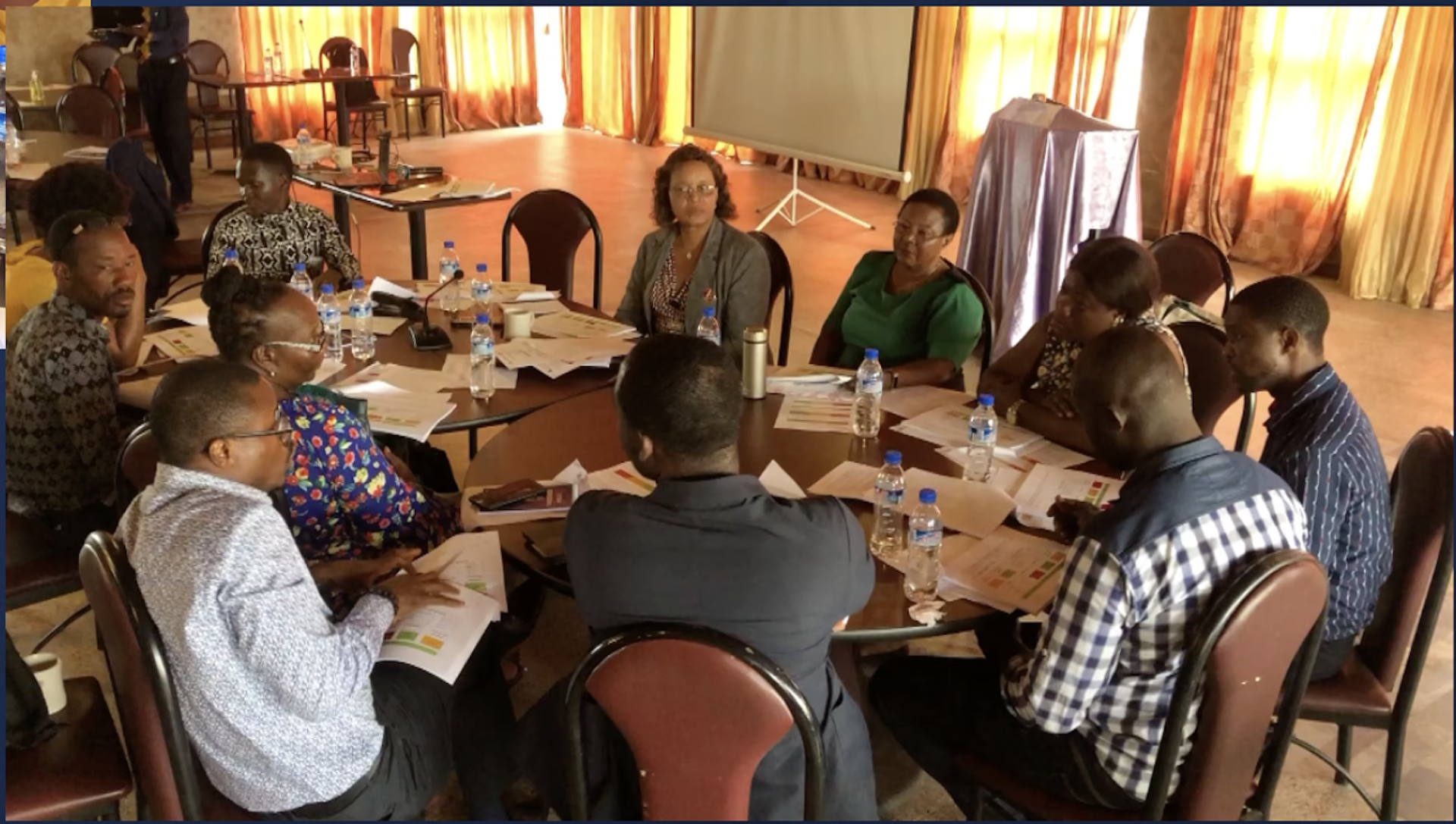
- Online surveys, workshops with key stakeholders to define decision-making criteria and processes
- Testing two prioritisation approaches: quantitative multicriteria decision analysis (MCDA) and qualitative MCDA with decision rules
The process combined stakeholder deliberation with evidence-informed evaluation to structure priority decisions.
Outcomes
The advisory committee expressed a preference for quantitative MCDA as the primary decision‑making approach, applying decision rules only when MCDA results generated uncertainty or disagreement.
Key lessons include:
- Structured deliberation strengthens the legitimacy and transparency of priority setting
- EDPs integrate multiple forms of evidence into a coherent appraisal framework
- The EDP framework promotes more structured, reasoned decision-making through tools like MCDA
- Applying EDPs enhances capacity strengthening for the use of HTA
- EPDs remain resilient and adaptable even under challenging circumstances, such as the COVID-19 pandemic
The implementation of EDPs proved feasible and is expected to significantly strengthen transparent, evidence‑informed benefit package design in Kazakhstan.
Collaborating Partners
Our work in Kazakhstan has been done in collaboration with the Ministry of Healthcare of Kazakhstan.