
Overview
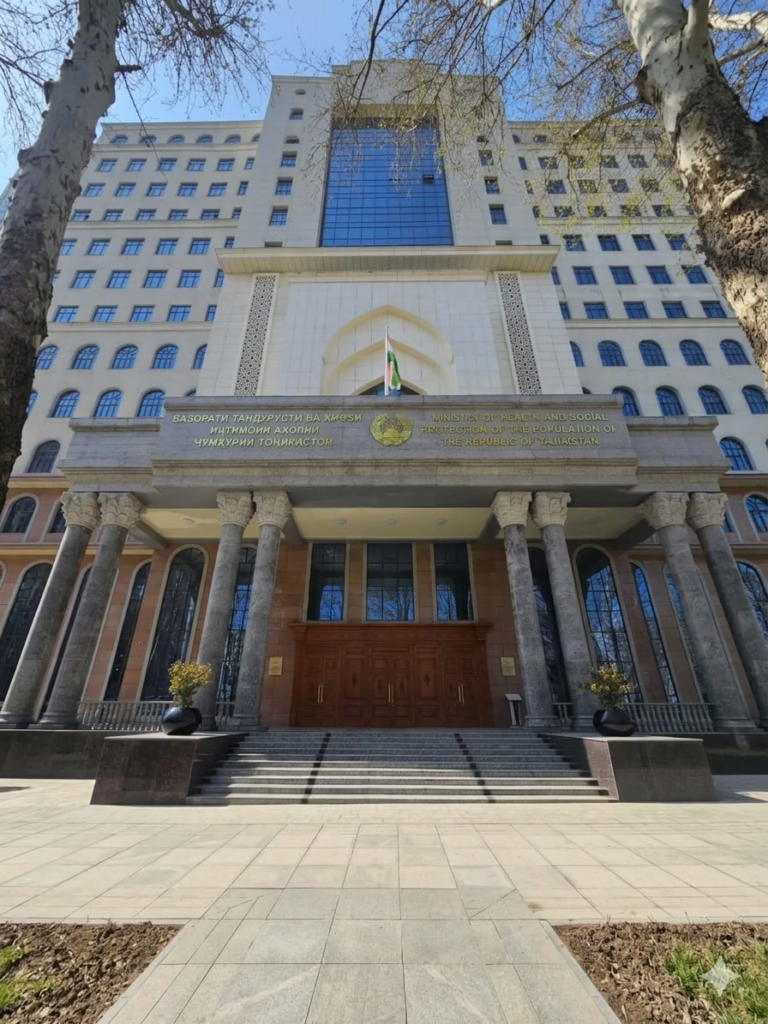
Tajikistan is undertaking a comprehensive reform of its primary health care (PHC) system under the World Bank–financed Millati Solim Project. A central component of this reform is the development and costing of a revised Primary Health Care Benefit Package (PHC) to support the introduction of strategic purchasing and the establishment of a national Health Services Purchasing Structure.
Beginning in 2026, Radboudumc and UCL support the Ministry of Health and Social Protection in reviewing, costing and defining the PHC benefit package as part of broader health financing reforms. The reform aims to align service entitlements with fiscal capacity while strengthening transparency and accountability in purchasing decisions.
Context & Objectives
The PHC benefit package reform forms part of Subcomponent 2.1 of the Millati Solim Project, which seeks to improve efficiency, equity and financial sustainability in Tajikistan’s health system. A key reform milestone requires the development, costing and formal approval of a revised State-Guaranteed Benefit Package (SGBP) for PHC.
The objectives of our engagement are to:
- Review the current PHC service delivery model and identify priority gaps
- Define clear inclusion criteria for services and medicines
- Estimate the full financial requirements of the revised package
- Assess fiscal sustainability under different financing scenarios
- Align the package with strategic purchasing reforms
- Develop monitoring and evaluation mechanisms
- Strengthen the legal and regulatory basis for implementation
The reform is designed to ensure that PHC entitlements are clearly defined, financially feasible and institutionally anchored.
Approach & Methods Used
Our work is grounded in HTA methods, organised through Evidence-Informed Deliberative Processes (EDPs), ensuring that technical analysis is embedded within formal governance structures.
The planned approach includes:
- Epidemiological and service utilisation analysis to identify PHC priorities
- Development of explicit inclusion criteria
- Costing and resource modelling of services, medicines, workforce and infrastructure
- Scenario analysis to assess budget implications and fiscal space
- Design of financing and purchasing arrangements aligned with reform objectives
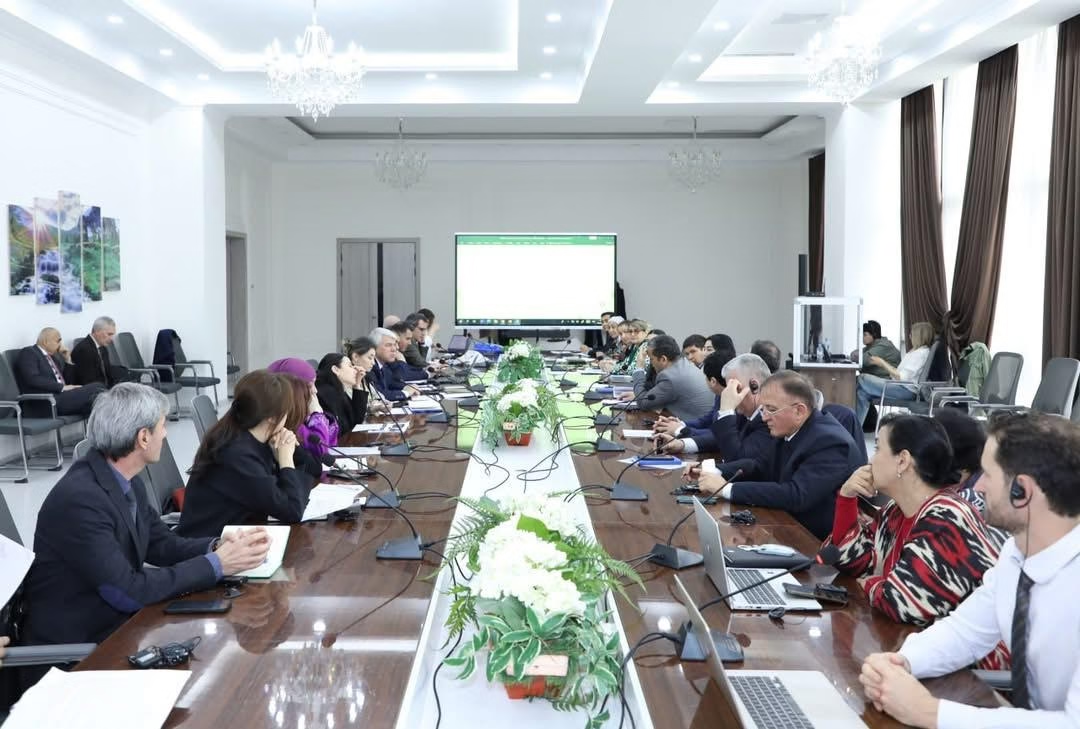
- Stakeholder consultation and deliberation to ensure transparency and legitimacy
- Development of monitoring indicators and implementation roadmap
- Legal and regulatory drafting to formalise the revised benefit package
Methods will be calibrated to available data, institutional capacity and reform timelines.
Expected Outcomes
The reform is expected to deliver:
- A clearly defined and formally approved PHC benefit package
- A costed financing plan aligned with strategic purchasing
- An updated and rationalised medicines list
- A monitoring and evaluation framework with measurable indicators
- Strengthened institutional capacity for ongoing package revision
- Legal and regulatory instruments to anchor implementation
The Tajikistan engagement represents a forward-looking reform linking benefit package design, fiscal sustainability and purchasing reform within a coherent policy framework.